

Expert Training
Life Data Analysis
Analyse complex life data, select models and validate forecasts.
- 4Modules
- 61Learning videos
- 37Knowledge checks
- 10Practical exercises
- 1Online exam
Why participate?
Evaluate life data reliably and avoid common pitfalls
What you gain from the training
Prepare field data
Correctly account for incomplete data sets and different types of censoring.
Compare procedures
Use MLE and MLS appropriately and interpret statistical metrics on a sound basis.
Selecting models
Select life and acceleration models that match the stress and failure mechanism.
Validate forecasts
Assess model assumptions, transferability and uncertainty before making technical decisions.
Programme content
Select a module
Module 1
Advanced Lifetime Data Analysis
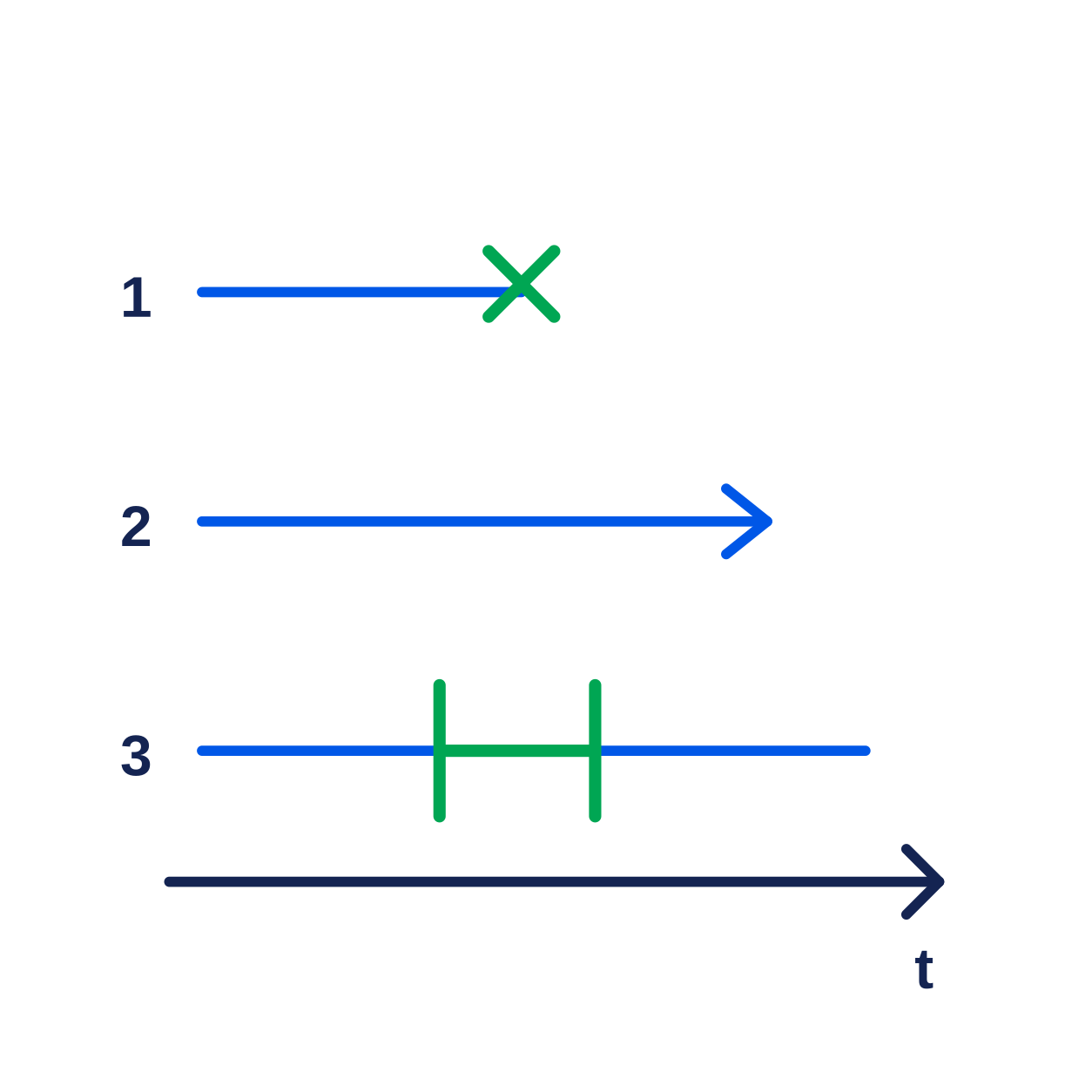
- Account for multiple censoring and mixed forms such as interval censoring
- Prepare real field data and incomplete data sets
- Identify common sources of error and uncertainty in data preparation
- Prepare a real field data set with different types of censoring
Module 2
Analytical methods for life data analysis
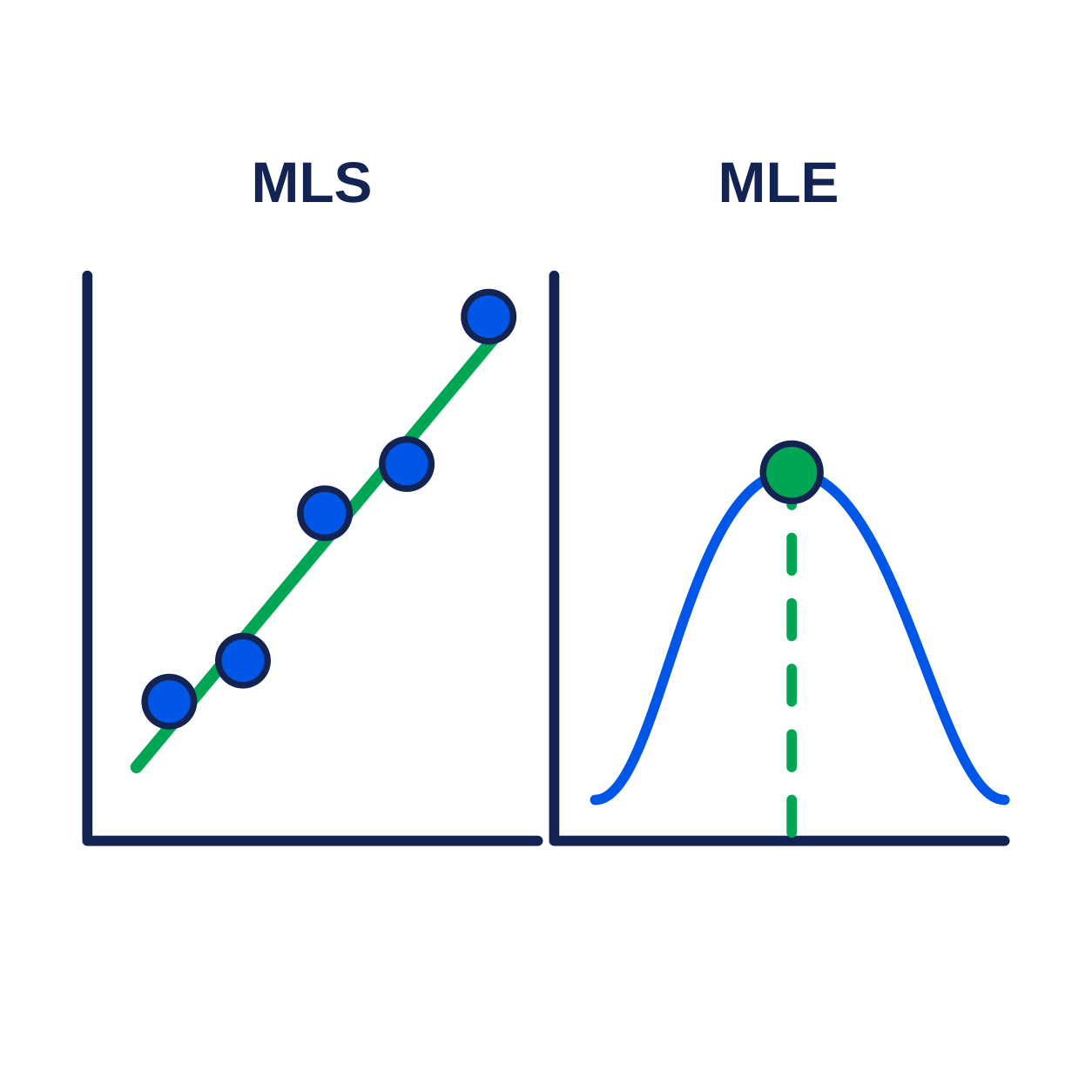
- Apply maximum likelihood method and least squares method
- Compare MLE and MLS based on their results
- Interpreting confidence intervals and log likelihood
- Compare two evaluation methods on a life data set
Module 3
Acceleration factors and life models
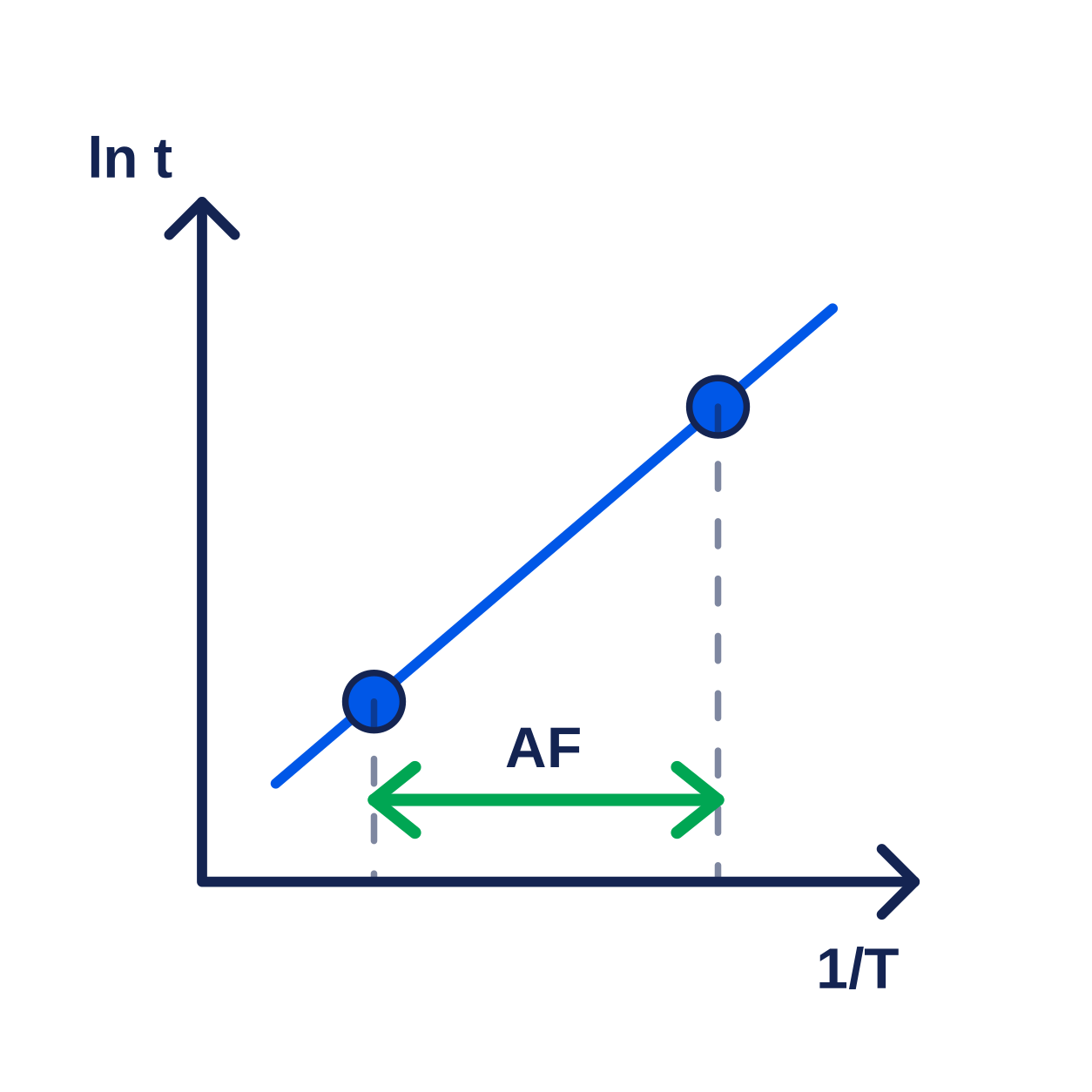
- Arrhenius, Eyring, Inverse Power Law and Coffin Manson models
- Calculate and interpret acceleration factors
- Evaluate model validation and transferability limits
- Select a lifetime model and determine the shirring factor
Module 4
Analysis of accelerated life data
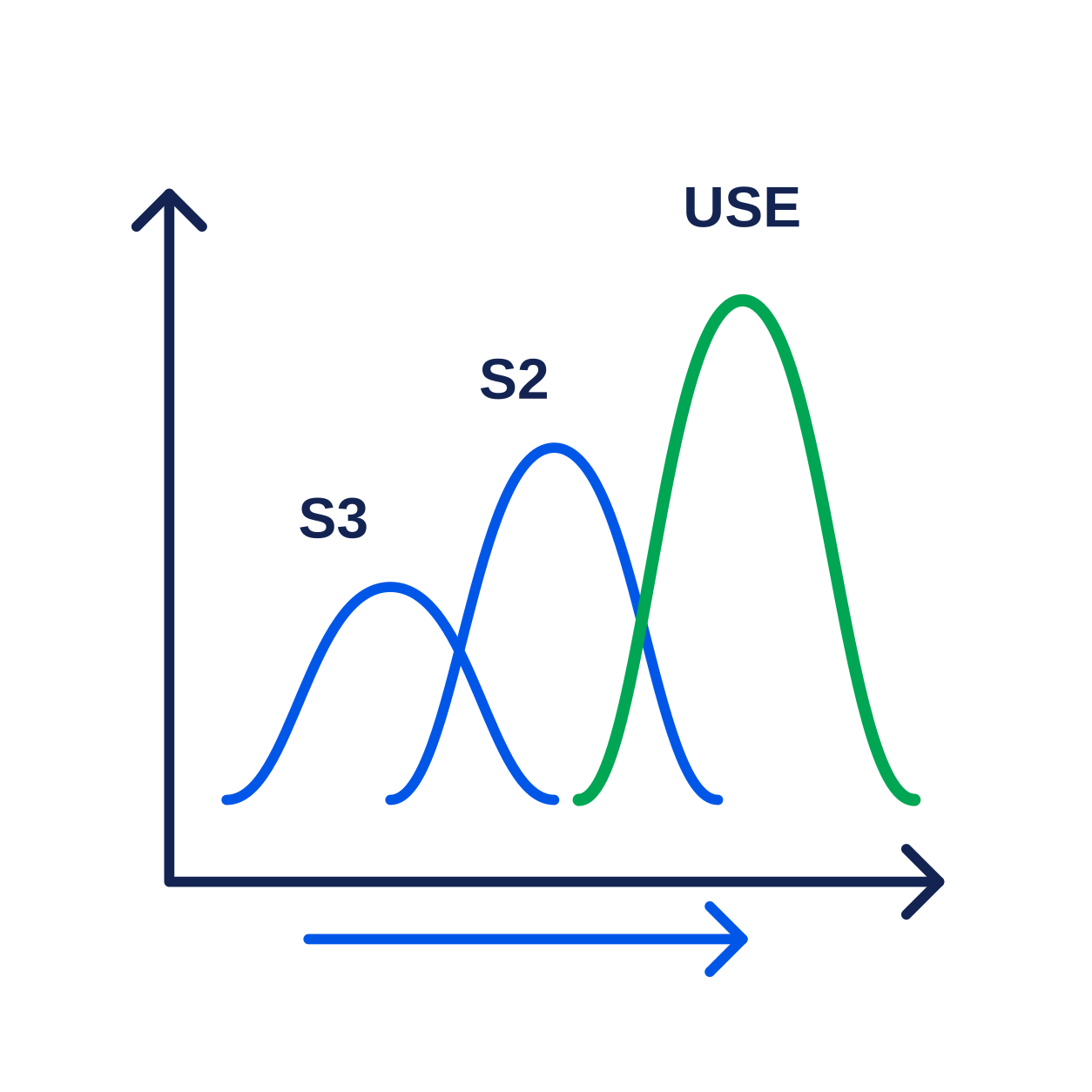
- Analyse and interpret accelerated test data
- Extrapolate results to real operating conditions
- Test model assumptions, plausibility and typical pitfalls
- Evaluate accelerated test data and derive a lifetime prognosis
What the training includes
Live online or in person
For advanced learners
With real data
With expert certificate
Learning objectives
You learn this in expert training
You apply the content through exercises and case studies from Reliability Engineering.
- Prepare real field and experimental data with multiple and interval censoring
- Compare maximum likelihood and least squares procedures and evaluate results
- Interpret confidence intervals, log-likelihood and other statistical metrics
- Derive acceleration factors using Arrhenius, Eyring, inverse power law or Coffin–Manson models
- Extrapolate accelerated life data to operating conditions and assess the model limits
Practice
Typical tasks in the analysis of life data
- Incomplete field data
Prepare population, exposure, failures and censoring for analysis.
ProblemField failures are available, but operating times and observation periods differ and some information is missing.
Solution in the training- Separate failures from right-, interval- and multiply censored observations.
- Define comparable populations and establish a reliable data set.
- Different analytical results
Compare MLE and MLS and assess the significance of the statistical metrics.
ProblemTwo evaluation methods provide different parameters and lifetime characteristics for the same data set.
Solution in the training- Select estimation methods and model assumptions to match the data.
- Use confidence intervals and log likelihood for results evaluation.
- Accelerated test data
Select a suitable life model and extrapolate it to operating conditions.
ProblemA product has been tested under elevated temperature or load; the service life in use is to be predicted.
Solution in the training- Link the acceleration model and the shirring factor to the failure mechanism.
- Check transferability, plausibility and limitations of the forecast.
Target group
Which areas of reliability do you work in?
Technical decisions and evidence
- Assess forecasts and uncertainties for technical decisions.
- Understand the robustness and limitations of a life prediction.
- Use results for test, release and action decisions.
- Technical project management
- Product management
- Reliability management
Reliability and Development
- Connect life data with product and failure mechanisms.
- Select suitable distributions and service life models.
- Translate analysis results into technical actions and design decisions.
- Reliability Engineering
- Development
- Systems engineering
Quality & Testing
- Analyse test data robustly and extrapolate the results to operating conditions.
- Correctly consider censored and accelerated test data.
- Test model assumptions and limits of extrapolation.
- Quality
- Test engineering
- Validation
Field data and after sales
- Assess field failures in relation to population and exposure.
- Structure incomplete field data for analysis.
- Separate failure modes and define comparable populations.
- Field data analysis
- After sales
- Warranty management
Exam and certification
Path to certification
4Modules
61Learning videos
37Knowledge checks
10Practical exercises
Online exam
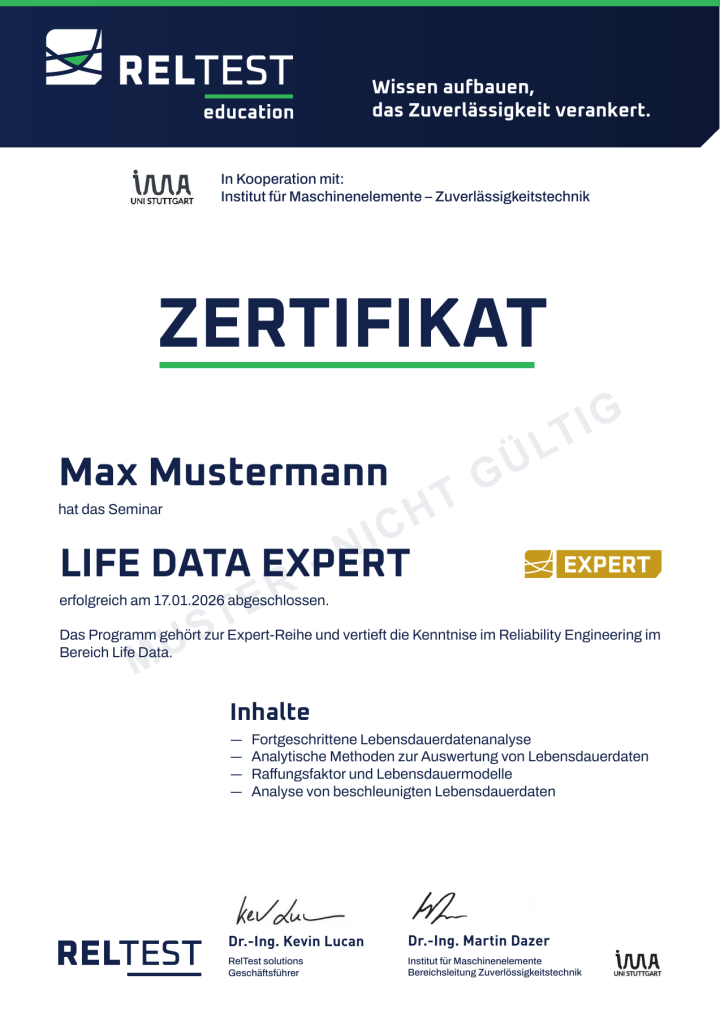
Certificate
The qualification
Certified Reliability Expert – Life Data Analysis
- Certified Reliability Expert – Life Data Analysis
- Certificates of participation for modules completed through RelTest Education
- Qualification equivalent to Certified Reliability Engineer level
The Certified Reliability Expert – Life Data Analysis certificate is issued in cooperation with the University of Stuttgart.
Details
Services and price
Included in the programme
- Learning scope4 modules, 61 learning videos, 37 knowledge checks and 10 practical exercises
- AccessOnline learning platform for web and mobile; dates and format by arrangement
- DocumentationDigital seminar materials and media library
- QualificationOnline examination and Certified Reliability Expert – Life Data Analysis certificate in cooperation with the University of Stuttgart
- Recommendation
- Fundamentals of reliability engineering.
- Learning pace
- Live online or in-person training. The date and format are agreed with participants. Materials and the exam are provided through the online learning platform.
- Technology
- Access via PC, tablet or smartphone. Minitab is required for the exercises; a trial licence is sufficient.
FAQ
Frequently asked questions about the programme
Answers about prerequisites, course format, technical requirements and qualification.
What prior knowledge do I need?
The Certified Reliability Engineer qualification is not required. A foundation in censoring, Weibull parameters, and selecting life data models is recommended.
How does Expert Training take place?
The training is available live online or in person. The date and format are agreed with participants. Materials and the exam are provided through the online learning platform.
What software do I need?
A PC, tablet or smartphone is sufficient to access the learning platform. Minitab is required for the exercises; a trial licence is sufficient.
How does the exam work?
The online exam takes place directly via the learning platform.
What certificate do I receive?
After successful completion, you receive the Certified Reliability Expert – Life Data Analysis certificate. It is issued in cooperation with the University of Stuttgart.
Next step
Does the Expert Training – Life Data Analysis fit your task?
We clarify with you whether the content and format suit your data, your questions, or your team.